Midweek Updates 11 November 2026
Compiled by Willie Bodenstein
Google Banner Ad
This Week in Midweek Updates
Russia offers Mi-17 helicopters to South Africa.
100,000 Sentry receivers shipped: what it means for South African pilots.
Qantas to launch first non-stop flights between Australia and Cape Town.
Marrakech Air Show 2026: Morocco pitches itself as Africa's next aerospace manufacturing hub.
Bell Delivers the 2,000th Bell 407, celebrating three decades of innovation and global impact.
Avolon Finalizes Order for 140 Boeing 737-10 Jets.
Ed Bolen Retiring after 22-year Reign at NBAA.
Eve Air Mobility and FlyBIS sign binding agreement for up to 12 eVTOLs in Southern Brazil.
This Week in History - Philip Parmelee became the first pilot to transport commercial cargo.
Worldwide Incidents and Accidents



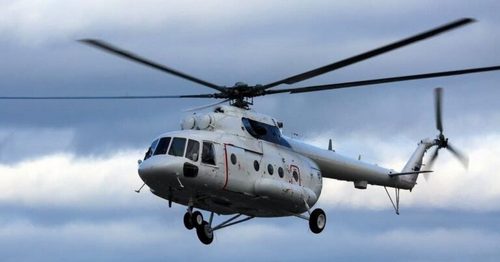
Russia Offers Mi-17 Helicopters to South Africa
Russia has expressed readiness to supply South Africa with aviation equipment, including Mi-17 helicopters, and equipment to modernise the country's railway infrastructure.
www.defenceweb.co.za
Russian Minister of Natural Resources and Environment Alexander Kozlov announced the proposals on 27 October at a meeting of the Russia-South Africa Business Council at the Russian Chamber of Commerce and Industry.
The Russian Embassy in South Africa noted that in May 2023, Russia's Rostec reported the delivery of 18 Ansat light multipurpose helicopters to Zimbabwe for medical evacuation services. Equipped with medical equipment for emergency care, the helicopters were intended to improve access to patients in areas difficult to reach by road.
With regard to railways, the Embassy said Russia is also ready to offer automatic control systems and other equipment to help modernise South Africa's railway lines and increase the capacity of the state railway network.
“Such cooperation could help modernise South Africa's railway infrastructure, increase the capacity of its rail network and improve the efficiency of freight and passenger transport.”
The Russian Embassy did not elaborate further on the Mi-17 offer. In March 2013, Denel Aviation and Russian Helicopters opened the first servicing and repair facility for Russian helicopters on the African continent, during a ceremony at Denel Aviation's facility in Kempton Park. Denel Aviation unveiled an Mi-8T operated by Advanced Aviation Logistics SA, which was mentioned as the launch customer.
The following year, Alexander Mikheev, CEO of Russian Helicopters, said, “in South Africa, Mi-8/17 and Ka-32 series helicopters are operated from the Denel Aviation service centre that services civilian Mi-8/17 helicopters.” However, there has been no mention of the partnership since.
 
100,000 Sentry Receivers Shipped: What It Means For South African Pilots
uAvionix and Jeppesen ForeFlight have announced that they have shipped 100,000 Sentry ADS-B receivers. For a portable box that started life as a compact traffic and weather receiver, that's a lot of pilots flying with extra eyes in the cockpit - and as a uAvionix dealer, it's a milestone we're happy to pass on.
What the Sentry family is
Sentry is a portable, dual-band ADS-B receiver built by uAvionix in partnership with ForeFlight. It talks to the ForeFlight app on your tablet or phone and comes in three versions:
Sentry Mini - the compact, travel-ready entry point, for traffic and GPS.
Sentry - adds a built-in carbon monoxide monitor with an audio and in-app alert, plus backup attitude.
Sentry Plus - the top of the range, with longer battery life, track logging, FLARM support and the same safety features.
What it's worth to a South African pilot
Here's where we want to be straight with you, because much of the marketing is written for US pilots. Sentry's subscription-free weather, NOTAM and TFR feed comes from the FAA's ground network, which doesn't exist here, and neither do the ground-station traffic rebroadcast services. Don't buy one expecting NEXRAD over the Highveld.
What does carry over:
Air-to-air traffic from nearby aircraft transmitting ADS-B Out - exactly the picture the SACAA's ADS-B mandate is building.
WAAS GPS and backup attitude displayed in ForeFlight.
Carbon monoxide monitoring on the Sentry and Sentry Plus. This one is a quiet life-saver in any piston aircraft with a heater.
It doesn't replace an installed, certified solution, and you don't need ADS-B Out to use ADS-B In. But as a low-cost way to see more of what's around you, it has earned its numbers.
Getting one
uAvionix supplies Sentry units alongside its installed products such as the AV-30, tailBeaconX, echoESX and AV-Link. If you're weighing up an ADS-B Out upgrade and want traffic awareness in the cockpit at the same time, we can put the two together for your aircraft.
Aeronautical Aviation · uAvionix dealer · Hangar 202, Lanseria International Airport · SACAA AMO No. 1033.

Qantas to Launch First Non-Stop Flights Between Australia and Cape Town
Australians will soon be able to fly non-stop to Cape Town for the first time, with Qantas today announcing a new seasonal service between Sydney and South Africa's Mother City.
The direct flights will take off in October 2027 and run through Cape Town's summer months until March 2028. Together with Qantas' existing direct services from Perth and Sydney to Johannesburg, the new route will give customers more choice when travelling between Australia and South Africa.
Once launched, it will add almost 30,000 seats between Australia and South Africa and is made possible by the introduction of new Qantas 787-9 Dreamliner aircraft arriving in late 2027 as part of the largest fleet renewal in the airline's history.
The new route comes 75 years after Qantas operated its first scheduled passenger service to South Africa. In 1952, the Wallaby Route to Johannesburg took 66 hours via Perth, the Cocos Islands and Mauritius. Next November, customers will be able to leave Sydney in the morning and land in Cape Town the same day.
More than 120,000 Australians visited South Africa in 2025, with demand continuing to grow. In June this year, Australia overtook Germany to become South Africa's third-largest overseas source market, with arrivals up 19 per cent year on year. The route will also bring families and friends closer together, with almost 225,000 South African-born people calling Australia home and around a quarter of them residing in New South Wales.
“Cape Town is a true bucket-list city and Australia's appetite to visit has never been stronger. Each year, tens of thousands of customers use our existing Johannesburg services to connect to Cape Town through our partner airlines Airlink, so we know there's strong demand for a non-stop service.”
“The arrival of our new 787s as part of our historic fleet renewal gives us the flexibility to grow our international network in places we know our customers want to travel, while also creating new opportunities for our people.”

Marrakech Air Show 2026: Morocco Pitches Itself as Africa's Next Aerospace Manufacturing Hub
By Edit The Bulletin www.defenceweb.co.za
For four days, the Marrakech Air Show turned the Royal Moroccan Air Force base there into a showcase for an industry Morocco no longer wants merely to host. Nearly 200 exhibitors from 27 countries attended the eighth edition from 7-10 October, and three agreements signed alone promised 950 direct jobs.
The sector now counts about 160 companies (compared to only 5 at the beginning of the century!) and 25 000 employees, while its exports rose from MAD26.4 billion (about $2.9 billion) in 2024 to MAD29.1 billion (about $3.2 billion) in 2025, before climbing another 21.5% in the first eight months of 2026. The industry group GIMAS hopes to lift annual exports from $3 billion to $5 billion by 2029. Defense spending is rising too, with about $8 billion allocated for 2026. After two decades as a cost-competitive subcontracting platform, Morocco now wants to climb into the segments where value is designed rather than simply assembled.
The industry grew on wiring, machining and components around Casablanca's Nouaceur cluster. The new wave targets far more complex systems. In February 2026, Safran announced more than €280 million for a landing gear equipment plant due in 2029, with around 500 jobs.
The French group is also preparing a €200 million LEAP-1A engine assembly line for the end of 2027, sized for 350 engines a year and 300 jobs. In addition, Pratt & Whitney Canada opened an engine components plant in April 2026, and China's Hangyu Technology chose Tanger Tech for a precision forging unit worth up to €105 million. Airbus, which took over Spirit AeroSystems' Casablanca site in December 2025 and now runs it as Airbus Maroc Aero, making A220 wing leading edges and A321 flap components, is preparing a unit to design, manufacture and assemble aircraft parts. At the show, Safran also created an oil systems entity in Nouaceur, its thirteenth Moroccan site. On the maintenance side, Safran's LEAP engine MRO center in Casablanca, a €120 million investment, should open in 2027 with capacity gor 150 engines a year and 600 jobs by 2030.
The most telling agreement, however, concerns building rather than production. On 7 October, Mohammed VI Polytechnic University formalised the consortium behind the Africa Centre of Manufacturing Excellence (ACME) in Nouaceur, gathering Boeing, Airbus, Lockheed Martin, Safran Nacelles, the Industry Ministry and the National Defence Administration around advanced manufacturing. Royal Air Maroc signed a five-year contract with Thales to digitalide its flight operations, and a separate deal with the Industry Ministry to source more from national suppliers. All of this rests on infrastructure built over twenty years, notably the MidParc free zone beside Mohammed V airport and the Institut des Métiers de l'Aéronautique, a public-private training center aligned with the needs of prime contractors. ACME's membership points to the next step. Former Secretary of State Mounia Boucetta notes that purely civil activities remain exposed to airline cycles, and that convergence with defense could deepen local capabilities.
At the show, Abdeltif Loudyi, the minister in charge of the National Defense Administration, described a deliberate shift from buying foreign equipment to manufacturing and maintaining it at home, for domestic needs and possible exports. A 2020 licensing law opened arms
production to private firms, and a company created in 2025 now runs two dedicated defence zones. Ten defense projects have been authorised, representing $260 million and more than 2 500 direct jobs.
French firm Harmattan AI intends to design and build IRIFI, a deep-strike drone, in the Nouaceur defence zone with Moroccan engineers, though the agreement is only a letter of intent an no firm order exists yet. Local company Aerodrive Engineering Services flew Atlas Istar, the first military drone made in Morocco, and plans to produce 500 one-way attack drones at Benslimane from 2027. Turkey's Baykar is building a plant in the same town for a product tailored to Moroccan needs rather than a simple assembly line.
Maintenance Aero Maroc, a subsidiary of Belgium's Sabena Engineering, created under a partnership with Lockheed Martin and the state developer MEDZ, is building a heavy maintenance center at Benslimane, due to open in the second half of 2026. It will start with C-130s, taking up to three at a time, with F-16s to follow. Since many African air forces fly the C-130, the depot could eventually serve foreign customers. The 25 F-16 Block 72 jets Morocco ordered for nearly $3.8 billion will add to that fleet over time. Korea Aerospace Industries signed a memorandum with MAM and SABCA Maroc on its T-50 trainer: KAI would supply the aircraft, while the two local firms would provide maintenance and possible structural work. Nonetheless, no official order, number of aircraft or timeline has been announced.
Morocco now works with partners from Washington to Seoul, and Israel it opened its first national pavilion at the show this year, with eight companies including Elbit, IAI and Rafael exhibiting. BlueBird, an IAI subsidiary, has already opened a site to build SpyX loitering munitions while training Moroccan engineers. Rabat is pursuing this cooperation despite domestic opposition to normalisation, which shows how far it is willing to go to acquire technology.
Exports still include imported components, so national value added is the true test, and many engineers still leave the country each year.
Many announcements are still memoranda of understanding. A recent policy brief urges Morocco to follow Turkey, which gave local firms military orders years before they began exporting. If Rabat manages that, its ambition of flying a “made in Morocco” aircraft around 2030 may look less distant.
Written by ADIT - The Bulletin and republished with permission.

Bell Delivers the 2,000th Bell 407, Celebrating Three Decades of Innovation and Global Impact
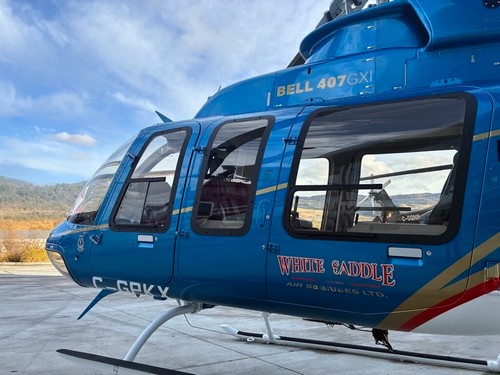
Bell Textron Inc., a Textron Inc. (NYSE: TXT) company, announced the delivery of the 2,000th Bell 407 to White Saddle Air Services a family-owned and operated helicopter company based at Bluff Lake, near Tatla Lake, in British Columbia's Cariboo Chilcotin region. The milestone marks a significant accomplishment for a platform that has supported operators around the world for nearly three decades across commercial, utility, corporate, and versatile mission operations.
Since entering service in the 1990s, the Bell 407 has earned a global reputation as a proven and versatile light single-engine, multi-mission helicopter. Its combination of performance, reliability, cabin comfort, visibility and operational flexibility has made it a trusted platform for customers operating in a wide range of environments and applications.
“The delivery of the 2000th Bell 407 is a tremendous milestone for Bell and for the global community of operators who have placed their confidence in this platform,” said Danny Maldonado, president and CEO, Bell. “This achievement reflects the dedication and expertise of the teams who collectively work together to engineer and build this platform, as well as the customers that use this aircraft to perform everyday missions.”
The Bell 407's strong track record has been shaped by operators across a range of sectors, including public safety, emergency medical services, utility, corporate transport and specialized missions. From critical missions in North America to diverse operations worldwide, these customers demonstrate the platform's ability to deliver dependable performance across a broad range of demanding environments.
Following the Bell 407's earlier evolutions, including the Bell 407GX and the Bell 407GXP, the Bell 407GXi was introduced in 2018 as the next advancement of the platform, bringing a new level of integrated technology and operational capability. The GXi introduced the Garmin G1000H™ NXi integrated flight deck, providing an all-glass avionics suite that enhances situational awareness, improves navigation and helps reduce pilot workload. Combined with the platform's proven performance, spacious cabin and mission flexibility, these advancements strengthened the Bell 407's ability to support demanding operations around the world and positioned the GXi to carry the platform into its next generation of service.
With 2,000 Bell 407 helicopters now delivered, the milestone reflects the continued confidence of the operators around the world who rely on the platform to support essential services, commercial operations and specialized missions. This achievement also recognizes the contributions of the team at Bell's commercial center of excellence in Mirabel, Quebec, whose expertise and commitment supports the production and delivery of the Bell 407 to customers worldwide. As the Bell 407 continues to evolve through modern technology and ongoing product improvements, the platform is positioned to build on its global legacy and serve customers for years to come.

Avolon Finalizes Order for 140 Boeing 737-10 Jets
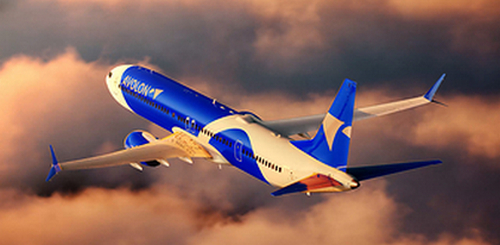
Boeing [NYSE: BA] and Avolon today announced the lessor finalized its purchase of 140 737-10 airplanes, a record 737 MAX order by a lessor that increases Avolon's backlog to more than 240 unfilled orders.
Lessors have placed firm orders for more than 230 737-10 airplanes in 2026, five times more than the lessor backlog for the largest 737 MAX variant at the end of 2025.
Boeing and Avolon today announced the lessor finalized its purchase of 140 737-10 airplanes, a record 737 MAX order by a lessor that increases Avolon's backlog to more than 240 unfilled orders.
With the 737-10, Avolon can meet strong market demand for larger single-aisle jets and leverage the versatility of the 737 family.
"We continue to see strong demand for new technology aircraft, and this order further strengthens our long-term delivery pipeline. The 737-10 combines outstanding economics with the capacity airlines increasingly require, making it one of the most attractive aircraft in its class," said Avolon CEO Andy Cronin. "This agreement enhances our ability to support airline growth and fleet renewal well into the next decade, while further strengthening our long-standing partnership with Boeing."
The 737, with a large customer base and low operating costs, is a cornerstone of most lessors' portfolios, representing approximately 30% of all financed airplanes.
"Avolon's growing and diverse 737 MAX portfolio enables its airline customers to modernize fleets with aircraft that reduce emissions and operating costs, improve route economics and support long-term sustainability goals," said Brad McMullen, Boeing senior vice president of Commercial Sales and Marketing. "As long-term travel demand is expected to remain strong, we stand ready to support lessors expanding their single-aisle portfolios with fuel-efficient jets that can operate across diverse route networks."
The 737-10 offers the best per-seat economics of any single-aisle airplane. It can seat up to 230 passengers and has a range of 3,100 nautical miles (5,740 kilometers).
Projected 4% annual passenger traffic growth over the next 20 years is driving lessors to broaden single-aisle offerings. Lessors have ordered more than 1,450 737 MAX airplanes, about 20% of Boeing's backlog.
Avolon is a leading global aviation finance company connecting capital with customers to drive the transformation of aviation and the economic and social benefits of global travel. We pride ourselves on our deep customer relationships, our collaborative team approach, and our fast execution. We invest with a long-term perspective, diversifying risk and managing capital efficiently to maintain our strong balance sheet. Working with 138 airlines in 62 countries, Avolon has an owned, managed, and committed fleet of 1,092 aircraft, as of 30 September 2026.

Ed Bolen Retiring After 22-Year Reign at NBAA
NBAA president and CEO Ed Bolen, who stepped aside in September as he continued cancer treatment, is retiring, the association announced this morning. The organization named Dan Hubbard, who has been serving as interim COO, as acting CEO and senior v-p of communications.
“I regret having to step down because of my health, and I have been touched by the outpouring of your support. Business aviation is at its best when we come together, and I have never been more confident in NBAA's brilliant future," Bolen said. NBAA has set up an email address where well wishes can be sent to Bolen.
NBAA board vice chair and Hillwood Aviation CEO Matt Byrd is chairing a special executive search committee for a new CEO at the organization. “Business aviation is an immeasurably stronger, safer, more dynamic industry because of Ed's unwavering commitment,” said NBAA chair John Witzig. “We have all soared higher and gone farther, driven by the power of his vision.”
Bolen steered the association since 2004 and before that was president and CEO of GAMA. He initially took leave ahead of NBAA-BACE 2026. While he did not attend, convention-goers honored him with sunflower pins to recognize his Kansas upbringing and upcoming enshrinement in the Kansas Aviation Hall of Fame. In announcing his retirement, NBAA said it “hails the pioneering legacy of Ed Bolen, an industry trailblazer.”

EVE AIR MOBILITY AND FLYBIS SIGN BINDING AGREEMENT FOR UP TO 12 EVTOLS IN SOUTHERN BRAZIL
Eve Air Mobility (NYSE: EVEX; B3: EVEB31)and FlyBIS Aviation Limited (“FlyBIS”) announced the signing of a binding agreement for up to 12 electric Vertical Take-Off and Landing (eVTOL) aircraft. The agreement comprises two firm orders and purchase rights for ten additional units.
The agreement builds on the Letter of Intent the companies announced in 2022 and advances their collaboration to establish electric air mobility operations in Brazil. FlyBIS plans to deploy Eve's eVTOL in Southern Brazil, initially connecting destinations in Santa Catarina and Rio Grande do Sul.
Potential routes include connections in cities such as Navegantes, Balneário Camboriú and Florianópolis along Santa Catarina's coastline, as well as services in tourism destinations in Rio Grande do Sul's mountain region, including Gramado and Bento Gonçalves.
“This binding agreement is an important step in our relationship with FlyBIS and demonstrates how our customers are progressing from early market development to concrete fleet commitments,” said Johann Bordais, Chief Executive Officer of Eve. “Southern Brazil harbors high demand for urban air mobility connections as it combines strong tourism and business activity. Together with FlyBIS, we will continue working to prepare the ecosystem for safe, efficient and sustainable eVTOL operations in the region.”
Eve and FlyBIS will continue collaborating on the requirements to support entry into service, including network planning, operational readiness, infrastructure and the integration of eVTOL services into the broader transportation ecosystem.
“Signing this binding agreement represents a significant milestone for FlyBIS and moves us closer to introducing a new form of regional and urban connectivity in Southern Brazil,” said Gustavo Zanettini, co-founder and Chief Executive Officer of FlyBIS. “Eve's integrated approach, combining the aircraft with services and operational support, provides a strong foundation as we prepare for future operations. We look forward to working together to connect important destinations more efficiently while delivering a safe and high-quality experience for our customers.”
The agreement comes as Eve continues to advance the development of its eVTOL and the broader ecosystem required to support commercial operations. Following its first flight, Eve's full-scale engineering prototype has completed more than 70 flights, including the hover and low-speed phases of its flight-test campaign. The company is now progressively expanding the aircraft's flight envelope through transition-flight testing, including the in-flight activation of its rear pusher propulsion system as it advances toward wing-borne flight.
In September 2026, Brazil's Ministry of Ports and Airports brought together aviation authorities, government representatives and Eve to discuss certification, vertiport infrastructure, energy supply, operational safety, telecommunications and airspace integration.
Brazil represents a premier market for urban air mobility, supported by government and certification authorities, a rapidly maturing ecosystem and strong passenger demand in cities where infrastructure has not kept pace with growth. These conditions make Brazil one of Eve's most important markets and position the country to be among the first to scale commercially following certification, with two operators already committed to deploying Eve's eVTOL and several others showing strong interest.


7 November 1910
Philip Parmelee became the first pilot to transport commercial cargo
Philip Orin Parmelee an American aviation pioneer was born on 8 March 1887 and trained by the Wright brothers and credited with several early world aviation records and "firsts" in flight.
On 7 November 1910, Parmelee became the first pilot to transport commercial cargo. His flight took him 65 miles (105 km) from Dayton, Ohio, carrying a package of 100 pounds of silk worth about US$1,000 for the opening of a store. Parmelee's route took him from Dayton to Columbus, Ohio by way of South Charleston and London, following the route of the old National Road. Newspaper clippings quoted the Wright brothers as stating he covered the distance in 66 minutes, but the flight was officially recorded at 57 minutes, a world speed record at the time.
Parmelee was killed in the crash of an airplane he was piloting at an exhibition in Yakima, Washington, when turbulence flipped the airplane upside down. But this was not a strange thing to happen; he had seven recorded plane crashes in his career.


Orient Airfield (FAOI) Gauteng South Africa: A light aircraft was towing a glider when it stalled and impacted the ground. The pilot suffered severe injuries to his legs.
USA, Santa Ana-John Wayne Airport, CA (SNA/KSNA): A Cessna 172M Skyhawk operated by the Orange County Flight Centre was following United Boeing 737 airliner on taxiway A to runway 02L at Orange County. All traffic was stopped at the hold short lines. When the United 737 powered up to line up 02L, N57BM behind them was overturned by the jetblast.
USA, Catalano Airfield (1NK6), Wilmington, NY: The airplane had successfully landed and was taxiing to the hangar when it struck a photographer and her tripod. The photographer suffered fatal injuries.
USA, near Ware County Airport (AYS/KAYS), Waycross, GA: A Beechcraft H35 Bonanza, N5445D, was destroyed when it crashed shortly after takeoff from runway 5 at KAYS. The pilot was killed. At 1115, the airport was reporting winds 270 at 11 knots 18 knots, 7 miles visibility, heavy rain, an overcast ceiling at 1,700 ft AGL, temperature 25 °C, dewpoint 21 °C,, and an altimeter setting of 29.95 inches of mercury.

|
                             |