This Week in Midweek Updates
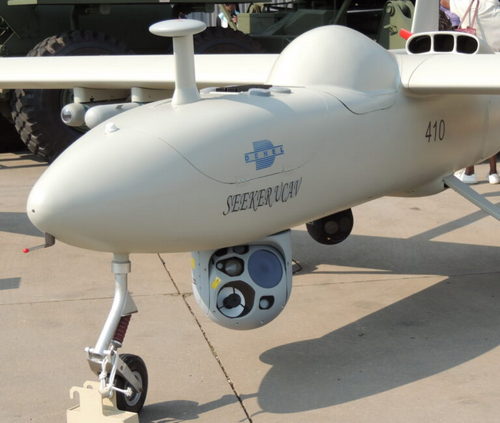
Denel Dynamics delivering solid support.
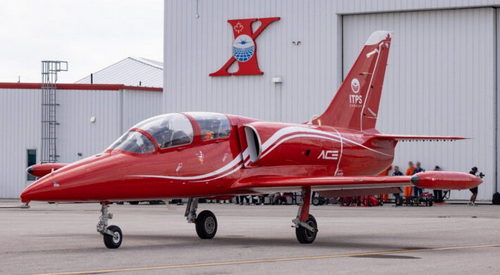
ITPS Canada expands its engagement across Africa.
Textron Aviation Marks rollout of 500th Latitude.
Joby autonomous aircraft begins cross-country tour.
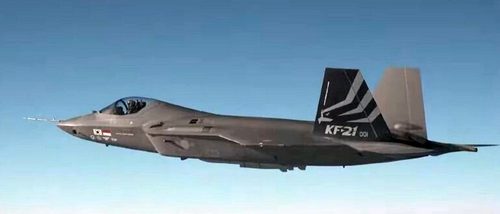
The delivery of the first KF-21 to the Republic of Korea Air Force (ROKAF) is a significant milestone in South Korea's indigenous fighter program.
Electra and Atlas sign airframe agreement for EL9 Ultra Short.
Collaborative Combat Aircraft arrive at Creech AFB, advancing operational integration.
The technology for seamless and contact-free air travel is ready and rolling out.
This week in history - Hughes H-1 breaks world landplane speed record.
Worldwide Incidents and Accidents
Bonus video - Bosbok at Sun 'n Fun Brits 2014
Denel Dynamics Delivering Solid Support
By Sam Bash www.defenceweb.co.za
As a global pioneer of unmanned systems and a leading missile house, Denel Dynamics plays an integral part in supporting these systems for the South African National Defence Force (SANDF) and international customers.
Speaking to DefenceWeb, Group Executive Thivian Vadivelu said the division has completed maintenance and upgrades on a number of the Seeker 200 unmanned aerial vehicles (UAVs) for a Middle East customer since first delivery. It has previously been reported that the United Arab Emirates acquired Denel Dynamics' Seeker II in the 1990s and later the newer Seeker 200 system.
“Our proven Seeker 200 system has been in service in the Middle East for over a decade,” Vadivelu said.
The larger and more advanced Seeker 400 has been delivered to the SANDF as the launch customer. “There was significant international interest in the Seeker 400's ability to carry light-weight missiles, like the Impi and Impi-S that we showed at the previous edition of AAD in 2024,” Vadivelu affirmed.
“On the missile front, the production of the A-Darter air-to-air missiles for the SANDF is continuing. “We've also participated in the firing trials of the trusted Ingwe anti-armour missile delivered to Malaysia. Those missiles were acquired for integration on a Denel developed turret system.”
In response to a question on the status of the Mokopa precision-guided anti-armour missile for South Africa's Rooivalk, Vadivelu said the missile was fully integrated on the attack helicopter in 2016, although the South African Air Force has yet to place an order. The Rooivalk's weapon system currently consists of its 20 mm chin-mounted cannon and unguided rockets.
“The Mokopa is indeed a formidable anti-armour missile, which Denel Dynamics has exported to a North African customer for integration on its maritime helicopters. The same customer has also acquired our proven Umkhonto missile for its navy's Meko A200 frigates,” he stated.
The Umkhonto surface-to-air missile (SAM) is in service with the South African Navy and that of Finland. Denel previously indicated that the Umkhonto SAM is operational in 12 naval vessels across the world - eight of them in the northern hemisphere. Whilst originally developed with a 12 km range, increased to 15 km, it can reach 20 km, as Denel has demonstrated. “The missile was also designed for a ground based systems, such as GBADS.”
“We have recently been awarded a contract for maintenance of the missiles for the Finnish navy,” Vadivelu said.
Denel Dynamics has previously displayed the Marlin - now called the Joint Strike Missile (JSM) - as a radar-guided beyond-visual-range (BVR) missile. This technology demonstrator was successfully tested, according to Vadivelu.
He is enthusiastic about Project Loki: a high-speed recoverable target drone. The drone simulates high-speed threats, such as a fighter jet or missile, and could be fitted with emitters to enhance its radar cross-section or smoke trail devices.
The Loki design is based on a swept-back wing with an H-tail airframe, constructed from composite materials. With the airframe based on Denel Dynamics' proven Skua drone, it simplified the aerodynamic design. Extensive use was made of COT (commercial off-the-shelf) components and building blocks. Some of the building blocks designed in-house, included the flight control computer, navigation solution (from an existing guided weapon), power supply system, and the flight control and guidance. The software was adapted from the Skua ground control station.
The Loki propulsion system is a twin turbine engine configuration, with each engine delivering 396 N of thrust. It will be launched using a catapult pneumatic launcher and recovered with a recovery controller, drogue parachute, main parachute and deploy-release system.
Vadivelu mentioned that a small cohort of Denel Dynamics personnel is based at the Houwteq facility in the Western Cape to support South Africa's space programme. They maintain the facility's thermal-vacuum ovens, mechanical and acoustic vibration areas and anechoic chamber - critical infrastructure for space research.
Vadivelu is currently also acting group executive for Denel Integrated Systems Solutions (DISS), which is the design authority and prime contractor for the SANDF's air defence system. He indicated that, although the Umkhonto is integral to South Africa's GBADS system, it has not yet been acquired for that purpose.
In a first phase of the GBADS programme DISS integrated the Starstreak very short-range air defence (VSHORAD) missile into the system and in phase 2 added the Skyshield new generation gun fire control system for the 35 mm Oerlikon air defence guns. These now sport the AHEAD ammunition capability, a pre-programmed projectile. DISS is now providing support to the Air Defence Formation based in Kimberley.
ITPS Canada expands its engagement across Africa www.defenceweb.co.za
ITPS Canada has increased its focus on Africa, developing strong relationships and strategic partnerships with key African air forces.
In January 2026, during the Black Lion Air Show in Addis Ababa, ITPS signed a collaboration agreement with the Ethiopian Air Force covering potential cooperation in aircraft modernisation and advanced training.
ITPS has also continued to strengthen its relationship with the Nigerian Air Force. This engagement has included professional exchanges and reciprocal visits, the delivery of an Introduction to Flight Test Course in Nigeria in November 2025, a Military Airworthiness Seminar in Abuja earlier in 2026, and an April visit by the Chief of the Air Staff, Air Marshal Sunday Kelvin Aneke, to the International Test Pilots School in Canada. The South African Air Force is amongst ITPS customers, and has sent multiple pilots and engineers to its facility in Canada over the years.
ITPS Canada, together with its subsidiaries, the International Test Pilots School and the International Tactical Training Centre, recently achieved accreditation under NATO Flight Training Europe. Together, the two organisations offer a comprehensive range of services, including training for flight test and evaluation personnel, advanced and tactical fighter pilot training, technical instruction, and specialist military aviation courses.
ITPS Canada's engineering division is also becoming increasingly active in providing maintenance, repair and overhaul solutions for military jet trainers, together with comprehensive avionics modernisation and long-term fleet sustainment services - particularly for operators of the L-39.
The company on 3 September flew the demonstrator of its L-39 ACE upgrade, incorporating modern avionics and a fly-by-wire flight control system. Building upon this achievement and its extensive experience in operating, modifying, upgrading and extending the service life of one of the world's largest civilian L-39 training fleets (ITPS Canada operates 14 L-39s at present), ITPS is offering several modernisation options capable of transforming existing L-39s into advanced-capability aircraft at what it says is a highly competitive price point. These options are complemented by reliable, long-term sustainment solutions for both the aircraft and its engine.
The L-39 ACE (Advanced Controls Evaluator) features fly-by-wire controls, allowing the instructor to essentially pre-programme the aircraft's handling characteristics. It can, for example, simulate an F-16 or introduce deliberate control instabilities. The ACE retains the L-39's original controls in the instructor's rear cockpit, but the front has been retrofitted with fresh avionics and a fully programmable sidestick.
ITPS has also signed collaboration agreements with the Odesa Aircraft Plant and JSC Ukrainian Defence Industry, widely known as Ukroboronprom. These partnerships strengthen the company's links with the Ukrainian aerospace industry and support the continued development of its L-39 upgrade, overhaul and sustainment capabilities for its own fleet and international customers.
ITPS is seeing huge growth in its contracted military training services, with an increased focus on NATO and its allies. It is growing its fleet as a result, and is in the process of acquiring six Leonardo M-346 T Block 20 trainers, which will be delivered from 2029. Another six may also be ordered. These will join the 35 fixed wing, rotary and unmanned aerial vehicles in the ITPS Canada fleet, which include Hunter, L-29 and L-39 jets.
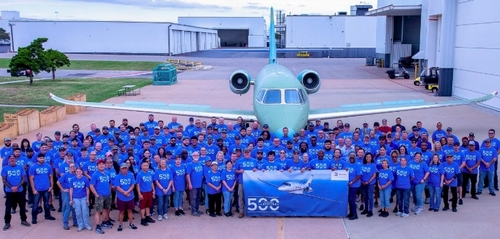
Textron Aviation Marks Rollout of 500th Latitude
Textron Aviation Inc., a Textron Inc. (NYSE:TXT) company, today announced the rollout of the 500th Cessna Citation Latitude business jet from the company's Wichita, Kansas, manufacturing facility. The production milestone highlights the continued success of the world's best-selling midsize business jet and recognizes the employees whose craftsmanship and dedication have helped make the Citation Latitude the trusted choice for operators around the world.
“The rollout of the 500th Citation Latitude is a testament to the employees who build this aircraft with dedication and pride every day,” said Eric Cardinali, senior vice president, Manufacturing. “Behind every aircraft is a team committed to delivering the quality and craftsmanship our customers expect. This milestone is only possible because of the skill of our workforce and the trust customers continue to place in our products.”
With an unmatched combination of spacious, stand-up, flat-floor cabin, strong mission capability and efficient operation, the Citation Latitude also delivers excellent range and short-field performance, allowing customers to bring that value to a wide variety of missions.
“At Textron Aviation, we strive to design and deliver the best aviation experience for our customers, and the Citation Latitude is a powerful example of that commitment,” said Lannie O'Bannion, senior vice president, Global Sales & Marketing. “Customers around the world continue to choose the Latitude because it delivers the comfort, versatility and value they need to accomplish their missions with confidence.”
The 500th rollout marks a significant achievement for the growing global fleet of Citation Latitude business jets. As operators continue to choose this platform, Textron Aviation remains focused on delivering the performance, productivity and innovation customers expect from Cessna Citation business jets.
The Citation Latitude midsize business jet, with a four-passenger range of 2,700 nautical miles (5,000 km) at high-speed cruise and a stand-up flat floor with 6 feet of cabin height, is set apart from the competition by its combination of comfort and efficiency. The aircraft's class-leading take-off field length of 3,580 feet (1,091 m) provides operators with greater range out of short fields. Innovation abounds with thoughtful features throughout the aircraft, the Citation Latitude offers an unrivaled cabin experience featuring the most open, spacious, bright and refined cabin environment in its category.
Providing strong value for a wide range of operators, the Citation Latitude offers seating for up to nine passengers, a maximum cruise speed of 446 ktas and a full-fuel payload of 1,000 pounds. The aircraft is designed to support a variety of missions with the comfort, capability and efficiency customers expect from a leading midsize business jet.
Joby Autonomous Aircraft Begins Cross-Country Tour
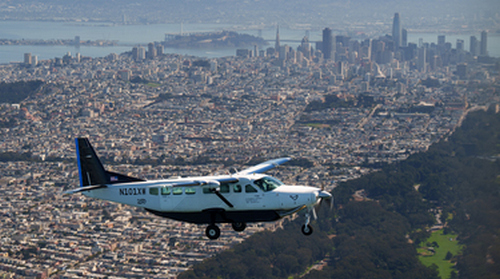
Joby Aviation, Inc. (NYSE: JOBY) recently announced that its autonomous J208 aircraft has begun a month-long, coast-to-coast tour with stops across 10 states. The tour demonstrates the real-world operational maturity, safety, and dual-use utility of its autonomous flight system for both civil and defense applications, including emergency services, as part of its work under the White House-backed eVTOL and AAM Integration Pilot Program (eIPP).
As part of a tour that will see the aircraft travel from California to the East Coast and back, the converted Cessna Caravan will demonstrate the flight capabilities that support future use cases spanning commercial freight, medical transport, disaster response, and defense logistics. By integrating an autonomous system onto an already-certified airframe, Joby offers an immediate, scalable path to autonomous air logistics.
“Autonomous flight can transform how we deliver essential supplies, respond to emergencies and support our servicemen and women,” said JoeBen Bevirt, Founder and CEO of Joby Aviation. “We've already demonstrated this technology in demanding military exercises. Now, we're taking it across America to show how the aircraft can integrate into our national airspace in order to serve communities, strengthen our logistics networks and help keep people out of harm's way.”
10-State Flight Route & Key Stops
As part of Joby's 2026 Electric Skies tour, the J208 features flight demonstrations, logistics showcases, and operational milestones.
As part of the tour, the J208 will demonstrate active flight operations in eIPP partner states across the country. In North Carolina, operations support NCDOT's eLIFT-NC initiative to establish a statewide aviation network for healthcare logistics and rapid emergency medical response. In the West, the aircraft joins UDOT's uFLY coalition, a five-state partnership, with tour stops in four of its member states: Utah, Arizona, Oklahoma, and Oregon, evaluating autonomous operations across high-altitude terrain, desert environments, and varied regional airspace to generate crucial operational data for future FAA airspace integration.
The delivery of the first KF-21 to the Republic of Korea Air Force (ROKAF) is a significant milestone in South Korea's indigenous fighter program
The KF-21 Boramae, a 4.5-generation multirole fighter, has undergone extensive testing and development, culminating in its mass production and operational introduction.
The aircraft's arrival at Yecheon Air Base marks the transition from development and prototype testing to service introduction, with plans for a wider fleet deployment.
The ROKAF Chief of Staff emphasized the importance of this handover, describing it as a historic achievement in South Korea's defense industry and national defense capabilities.
Electra and Atlas Sign Airframe Agreement for EL9 Ultra Short
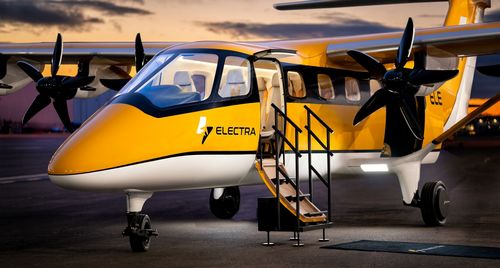
Electra and Atlas today announced a landmark airframe agreement for the EL9 Ultra Short airplane, pairing Electra's innovative aircraft design with Atlas's proven aerospace manufacturing expertise as the program advances through flight test, certification, and toward scaled commercial production.
Electra is developing the EL9 Ultra Short to open the door to Direct Aviation: a new model of regional travel that brings air service closer to where people live, work and play. In carrying nine passengers and meaningful payload while taking off and landing in as little as 150 feet, the EL9 can operate from dramatically smaller spaces, enabling shorter, more direct journeys between communities rather than routing travelers via long drives or through distant, congested airports.
Under the agreement, Atlas will manufacture and assemble EL9 airframes for Electra's flight test and certification program. Work is scheduled to begin this month at Atlas' facilities, with first deliveries expected in 2027. The partnership marks a significant milestone on Electra's path to certification and commercial entry into service, drawing on Atlas's deep experience in aerospace manufacturing, complex aerostructures, production system development, and automated manufacturing.
The two teams will work closely to mature the EL9 production architecture, reduce manufacturing risk, and build the industrial foundation needed to scale output after certification.
“Today's agreement with Atlas is another great milestone in Electra's journey to open a new era of aviation,” said Marc Allen, CEO of Electra. “The EL9 is designed to transform how people travel and where aviation serves us all. Realizing this vision requires more than a breakthrough aircraft; it requires the ability to build and deliver it with the consistency and scale of an advanced production system. Atlas, with its manufacturing expertise and aerospace discipline, now joins us in turning the EL9 from a new kind of airplane into a new way of connecting communities.”
“We are excited to be a part of the Electra team as we engage in transforming a groundbreaking hybrid-electric aircraft concept into a producible, scalable platform,” said Greg Harwell, CEO of Atlas. “Atlas brings decades of expertise in aerospace manufacturing, industrialization, and supply chain execution to help bridge the gap between innovation and production, ensuring the EL9 is positioned for successful growth and long-term market adoption.”
The EL9 is a nine-passenger hybrid-electric aircraft designed to take off and land in as little as 150 feet, enabling operations from locations far smaller and closer to where people live, work and travel than conventional airports. Its blown-lift aerodynamics and distributed electric propulsion work together to generate the lift needed for Ultra Short operations, while a turbogenerator supplies the onboard electrical power required for practical regional range and payload.
In combining the accessibility of a helicopter with the speed, comfort and operational flexibility of a fixed-wing airplane, the EL9 is designed to make direct regional air travel practical. It is intended to deliver quiet, safe, affordable service with meaningful payload and practical range from more locations than traditional aircraft can today serve.
The Atlas agreement comes as Electra moves rapidly from demonstrating Ultra Short technology toward certification, production and commercialization of the EL9.
In July, the FAA formally established the EL9's certification basis, defining the framework for several industry firsts including distributed hybrid-electric propulsion, blown lift for ultra-short takeoff and landing, and advanced fly-by-wire flight controls. Electra has also entered a life-of-program development and production agreement with Safran for the TG600 turbogenerator that will power the EL9.
Electra has selected Springfield, Ohio, as the home of its first EL9 production facility. The planned $850 million investment will create nearly 2,000 jobs and is designed to ultimately support production of up to 800 aircraft annually. Together, Electra's production campus and a growing network of experienced aerospace partners are creating the industrial base needed to move the EL9 from certification into high-rate commercial production.
Those investments are being driven by a regional mobility market that already exists at significant scale. Electra's Direct Aviation Market Outlook identifies approximately 35 million passenger trips each day across U.S. regional routes between 50 and 500 miles. In the heart of the market, trips between roughly 50 and 250 miles are too long to drive and too short to fly, leaving most travelers with few practical alternatives.
Electra estimates that serving the modeled Direct Aviation market between 2030 and 2040 will require 12,000 to 16,000 EL9 aircraft. The company has secured more than 2,200 provisional aircraft orders from more than 60 operators worldwide, and earlier this year Bristow Group entered into a pre-delivery payment agreement securing the first EL9 delivery slot for five aircraft, with options for an additional 45, subject to certification.
The EL9 is targeting entry into commercial service in 2030.
Collaborative Combat Aircraft arrive at Creech AFB, advancing operational integration
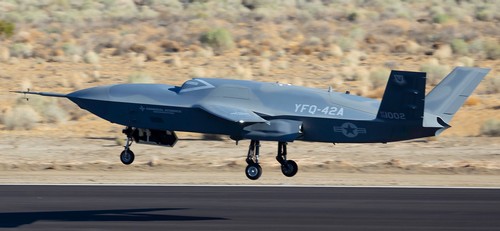
The Air Force received its first two Collaborative Combat Aircraft at Creech Air Force Base, Nevada, marking a significant step toward integrating uncrewed, semi-autonomous aircraft into future combat operations.
Anduril delivered the first CCA, the YFQ-44A, to the Experimental Operations Unit last month, and General Atomics delivered the YFQ-42A last week. The aircraft will support Air Combat Command-led operational experimentation to refine how CCA will be employed alongside crewed aircraft in contested environments.
“Putting CCA in the hands of Airmen is how we build the operational future of this program,” said Secretary of the Air Force Troy Meink. “Anduril's Fury and General Atomics' Vengeance deliveries show we can move at incredible speed, compete, and deliver cost-effective combat power to the force.”
The arrival of the aircraft at Creech builds on the Air Force's accelerated approach to CCA development, which emphasizes competition, speed and early operator involvement. Recent milestones include Anduril's YFQ-44A AIM-120 live-fire test and the second Agile Combat Employment Exercise, both occurring in July. This acquisition approach enables the Air Force to evaluate aircraft performance and employment concepts while informing the training, sustainment, manpower and infrastructure needed to field the capability at scale.
“We're thrilled to welcome Fury and Vengeance to the experimental operational unit,” said Air Force Chief of Staff Gen. Ken Wilsbach. “Our Airmen are excited to see what Collaborative Combat Aircraft can do.”
Airmen assigned to the EOU have already begun evaluating CCA operations in representative conditions, designed to assess how smaller teams can generate sorties from distributed and austere locations. The effort will help determine how CCA can extend the reach, flexibility and survivability of the Combat Air Forces while operating as part of a broader human-machine team.
The CCA program is part of a broader Department of the Air Force effort to deliver affordable, adaptable and combat-ready capability at speed. Operational experimentation at Creech will continue to inform how future units organize, train, equip and employ CCA in support of air superiority and other combat missions.
The Technology for Seamless and Contact-Free Air Travel is Ready and Rolling Out
The facilities and systems enabling passengers to fly and cross borders will soon face unprecedented pressure, with global passenger volumes more than doubling over the next 25 years. The good news is that the technology required to support more seamless and contactless travel are already available or reaching maturity. The challenge now lies in achieving consistent governance, interoperability, and global implementation. Ensuring this technology is deployed strategically, inclusively, and on time has been the first priority for delegates at ICAO's on-going TRIP Symposium in Montréal.
ICAO Digital Travel Credentials (DTCs), biometrics, and secure data-sharing technologies have progressed significantly, with pilot projects and operational deployments demonstrating their potential to facilitate seamless travel while maintaining high levels of security and privacy.
ICAO's vision is for travelers to use secure, interoperable digital travel credentials and biometrically-enabled verification processes throughout the travel journey, reducing reliance on physical document presentation while preserving State control over identity verification and border decisions.
States emphasized that because trust and security are not absolute, they must be built on strong evidence-of-identity processes, secure document issuance, and robust foundational data. ICAO Annex 9 standards, Doc 9303 specifications and the Public Key Directory (PKD) provide the foundation of the global trust framework that supports secure and interoperable travel document verification worldwide.
The hardest problems lie in the fact that governance within and across States remains fragmented. Ministry, border agency, airport, and information technology teams work at different speeds, use different technical languages, and rarely coordinate from the outset. Alignment will begin domestically and then extend globally to create the seamless experience the sector envisions.
This fragmentation risks deepening the divide between advanced countries with interoperable e-passport systems and lower-resourced States, as well as vulnerable populations such as refugees and the stateless, who are often excluded from modern travel infrastructure. Small States and States with scarce resources, among others, face persistent obstacles when joining global systems or implementing advanced checks due to cost and technical requirements, while remote, and low-capacity regions, including Pacific Island nations, face unique mobility needs.
Rapid modernization increases the risk of a two-speed world, where some countries or airports fall behind. Airlines, airports, governments, and technology firms must coordinate to ensure progress in every region. In parallel, security threats are increasing, with AI-enabled document fraud and identity spoofing being among the emerging concerns.
Advances in quantum computing may, over time, challenge the cryptography that underpins both passports and digital identity systems. Participants warned about 'harvest now, decrypt later,' where data is collected today for decryption once quantum computers advance-prompting discussions on the future adoption on the future of post-quantum standards, even as those standards continue to evolve. Regulatory and privacy limitations add further complexity. For example, some jurisdictions prohibit remote reading of a passport chip.
Finally, cost remains front and center. Systems that raise operational or end-user costs will not see widespread adoption by airports, airlines, or travelers, for example, when small or remote nations are forced to adopt overengineered or unsustainable systems, risking regular passport access for their citizens.
Phased modernization gives every State and airport a clear path forward. This approach starts with digitizing pre-checks, moves to issuing secure credentials, and then connects identities to biometrics and seamless corridors. Interoperability will be built into every new system to ensure future cross-border use. New security features that detect AI forgeries will keep traveler identities trustworthy, with some perceiving the move to post-quantum cryptography as an opportunity for late adopters to leapfrog directly to future-proofed systems.
Hughes H-1 Breaks World Landplane Speed Record
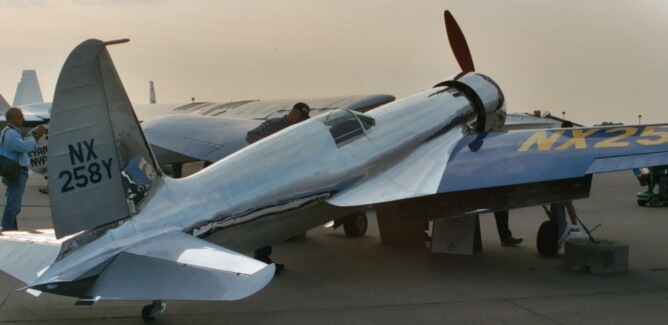
Ninety-one years ago, Howard Hughes flew the sleek Hughes H-1 Racer to a new world landplane speed record, averaging 352.39 mph over a course near Santa Ana, California. Built specifically to challenge aviation's speed limits, the H-1 combined advanced streamlining, retractable landing gear, and powerful performance, earning its place among the most influential racing aircraft of the 1930s.
Using different wings, it set both a world airspeed record and a transcontinental speed record across the United States. The H-1 Racer was the last aircraft built by a private individual to set the world speed record; most aircraft to hold the record since have been military designs.
South Africa, Morningstar Airfield, Cape Town, Western Cape: A Piper PA-28-180 Cherokee C crashed under unknown circumstances shortly after takeoff from runway 02 at Morningstar Arfield, Cape Farms, Cape Town. The three occupants suffered minor injuries and the aircraft was destroyed.
Democratic Republic of the Congo, Kenge: A Let L-410UVP, 9S-GUC, crashed and burst into flames near Kenge, D.R. Congo. All 17 occupants reportedly perished in the accident.13 passengers and four crew members. The flight departed Kikwit about 13:50. It came down near Kenge bout 14:05. Lieutenant General Mutombo Katalayi Tiende Joseph, First President of the High Military Court, and Lieutenant General Likulia Bakumi Lucien René, Prosecutor General of the FARDC, was on board, accompanied by a major, a captain, and other military personnel as well as some civilians.