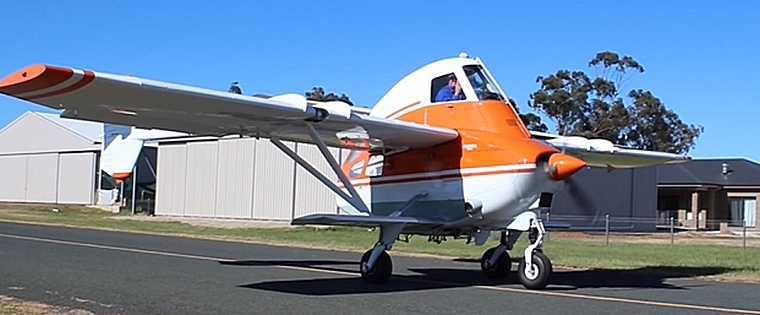
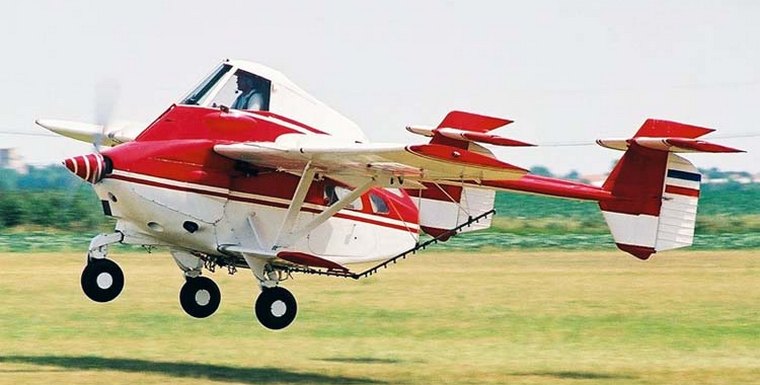
Few aircraft in aviation history have ever been described as beautiful, but the Transavia PL-12 Airtruk was certainly memorable. With its unusual twin-boom tail, elevated cockpit and awkward proportions, the Airtruk looked unlike anything else operating from farm strips during the 1960s and 70s. Yet beneath its ungainly appearance was a remarkably practical and capable agricultural aircraft that earned the respect of many pilots who flew it.
The story of the Airtruk began in New Zealand during the early 1960s when Italian immigrant and aircraft designer Luigi Pellarini developed the Bennett Aviation PL-11 Airtruck. Designed primarily for spreading fertiliser and seedlings, the aircraft was intended to be rugged, simple and capable of carrying heavy loads into and out of short farm strips.
The PL-11 incorporated several components from the North American Harvard trainer, including the complete cockpit section with its sliding canopy. Although the concept showed promise, financial difficulties prevented the aircraft from entering production.
Pellarini, however, was not prepared to abandon the idea. He continued refining the design, adapting it for a more modern 224 kW (300 hp) Lycoming engine. Eventually the project was taken over by Transavia in Australia, where employees hand-built the prototype of the improved PL-12 Airtruk.
Powered by a 213 kW (285 hp) Rolls-Royce/Continental IO-520-A engine, the prototype made its maiden flight on 15 April 1965 with New Zealander Neil Johnston at the controls. Certification followed on 10 February 1966 and later that same year the aircraft entered production.
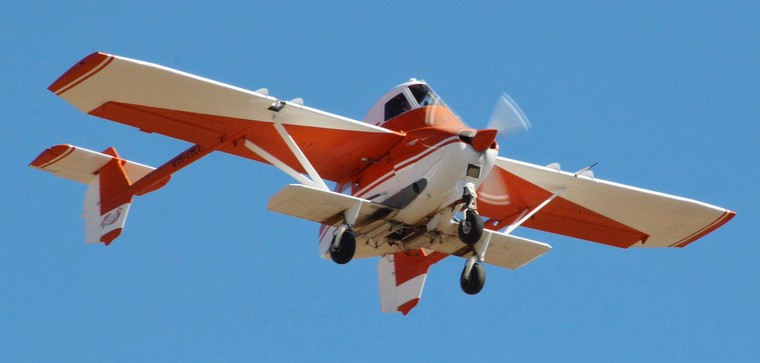
The Airtruk's design was unconventional but highly functional. The pilot sat high above the hopper, providing excellent visibility during low-level agricultural work. The large gap between the twin tail booms allowed trucks easy access to the hopper for loading fertiliser and seed, while the stub wings helped create airflow patterns that improved spreading efficiency.
To publicise the aircraft internationally, the Australian Department of Trade requested that Transavia demonstrate the type at agricultural shows in Nairobi and Cape Town. Aircraft VH-TRI was specially fitted with a fibreglass fuel tank inside the hopper to extend its range for the long delivery flight.
Flown by Mr R Williams, the Airtruk embarked on an epic journey from Australia to Africa. Demonstrations were conducted en route in Thailand and India. During the expedition the aircraft logged approximately 220 flying hours and covered nearly 28,967 km (18,000 miles).
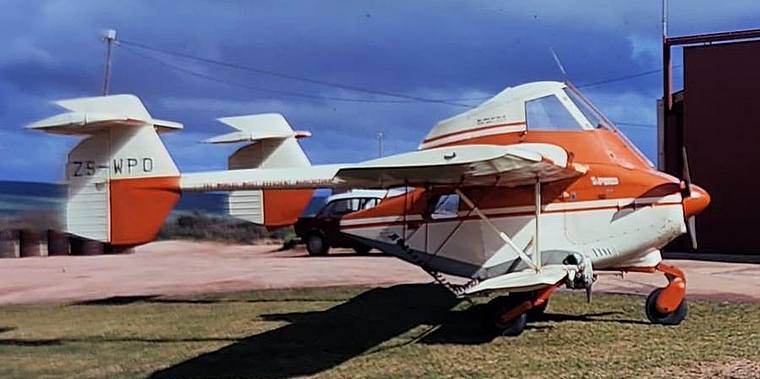
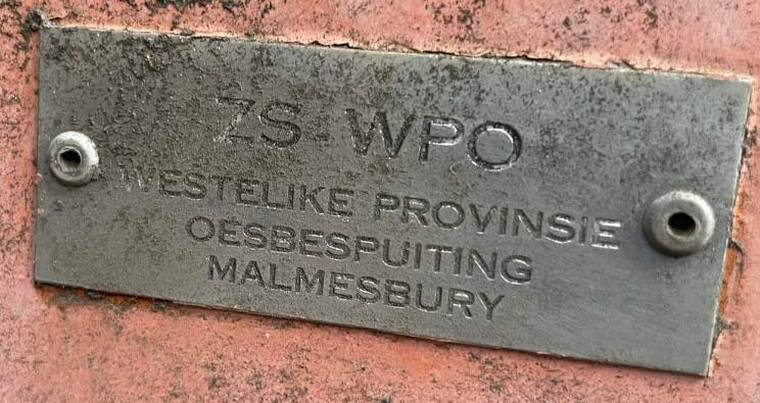
Rather than returning home, the aircraft remained in South Africa, where it would later become registered as ZS-WPO.
The following fascinating information regarding the Airtruk in South Africa was kindly supplied by Francois Marais:
“The aircraft you're referring to is ZS-WPO. It was powered by a Continental 300 hp (IO-520) engine driving a McCauley two-bladed prop. That particular aircraft was flown from the factory in New South Wales to South Africa via South East Asia and Europe on a demonstration tour in 1969/70.”
ZS-IGG, one of the Airtuks being assembled by Francois's father.
“My father bought the aircraft at that time, and owned and operated it until he retired and sold his business to Sentrachem (Agricura) in 1977. Agricura operated it for a while, and then it got damaged in an accident.”
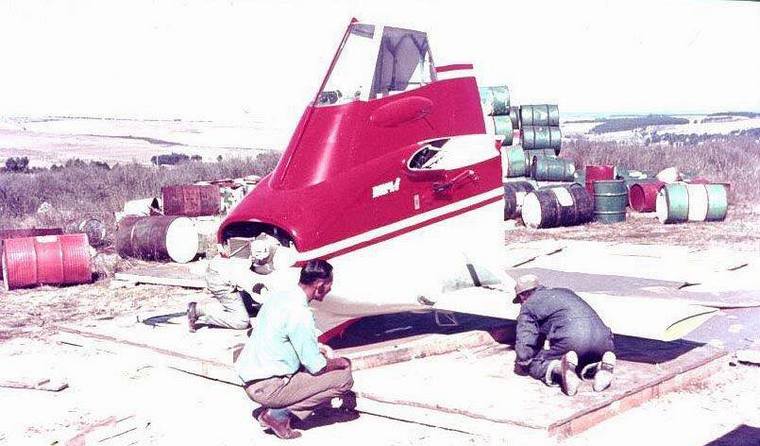
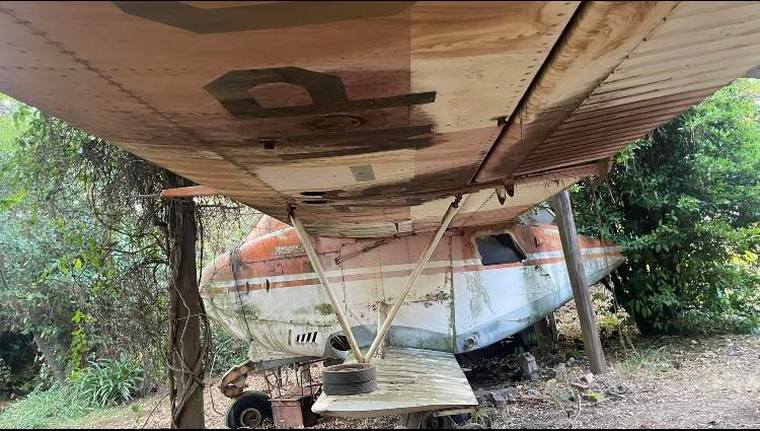
“Agricura, the crop-spraying company, was later sold to Orsmond, and they decided to scrap the aircraft. It stood out there at the Bethlehem airfield for years, and I guess Orsmond decided to donate the fuselage to a school.”
Francois also recalled one of the few operational issues encountered with the aircraft:
“My brother Eugene used to fly the aircraft, and the only problem that was ever encountered with that particular aircraft was a fair amount of corrosion around the hopper area, which was situated behind the cockpit. It was always extremely difficult to clean that area, and I guess that a fair amount of chemical seeped into the wall separating the cockpit from the tank.”
The Airtruk's unusual configuration made perfect sense in its intended role.
“The aircraft was originally built for seeding and fertilizer applications, from there the wide opening between the tail booms. Easy access to drive the loader truck up to the hopper. The stub wings assisted in creating some form of airflow for the seeding and fertilizer application, and I remember that the demonstration pilot actually spread some fertilizer without fitting a spreader.”
South Africa briefly operated additional Airtruks as well.
“Shortly after my father purchased the aircraft, two PL-12s were purchased by a Bethal-based crop-spraying company, and one of them, ZS-IGG, was assembled by my father in his hangar at Malmesbury.”
Unfortunately, both aircraft were later lost whilst spraying sugar cane in Natal.
“About a year later, both those PL-12s were written off in Natal whilst spraying sugar cane, and so ZS-WPO remained the only one to fly in South Africa until such time it was scrapped.”
Despite its practicality, the Airtruk arrived in South Africa at a time when agricultural operators were increasingly favouring larger radial-engined aircraft such as the Grumman Ag-Cat and Rockwell Thrush Commander.
“The Airtruks were not particularly popular in SA as crop-sprayers. At that time the crop-spraying companies were looking at bigger aircraft such as the Grumman Ag-Cat and the Rockwell Thrush Commander. They were radial-powered aircraft (R-1340), and Avex Air was the agent for the Ag-Cat and brought the first one into the country, ZS-AVX.”
Francois also shared an interesting technical detail regarding the Ag-Cat's spray system:
“Unlike other ag aircraft that had the spray booms hanging on the trailing edge of the wing, ZS-AVX had the booms fitted in the front area of the wing, about six inches aft of the leading edge.”
He concluded with a brief insight into the development of agricultural aviation in South Africa:
“Orsmond Aviation started in about 1976, and they later on became the agent for the Rockwell Thrush, and were also the first company in SA to operate the turbine Thrush, circa 1980.”
Many thanks to Francois Marais for sharing these wonderful memories and photographs. What initially appeared to be simply the story of an oddly shaped agricultural aircraft evolved into a fascinating glimpse into the early development of crop-spraying aviation in South Africa.
The Transavia PL-12 Airtruk may never have won any beauty contests, but for those who flew and operated it, the strange-looking “Ugly Duckling” was a hardworking and highly capable machine that certainly earned its place in aviation history.