Aero Club Communique # 10 of 2026.
Sonex closing its doors.
What MOSAIC means for RV owners.
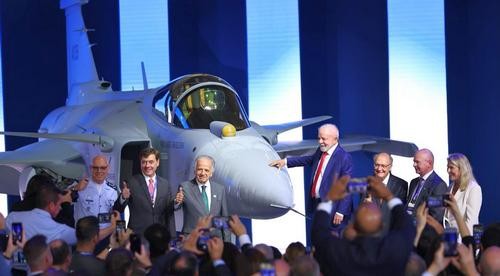
Embraer, Saab and the Brazilian Air Force unveiled the first Gripen E Fighter produced in Brazil.
ICAO New aircraft will face stricter environmental standards.
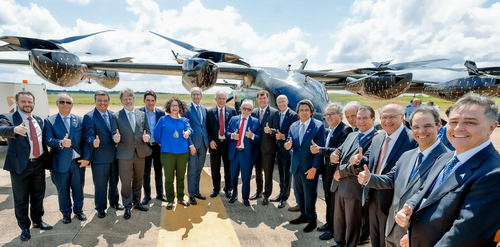
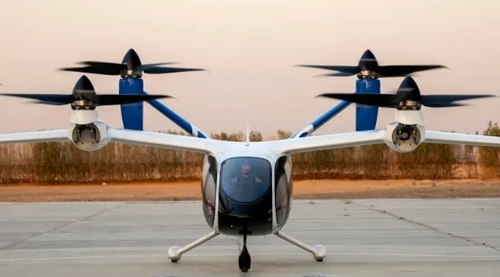
Eve Air mobility flies eVTOL prototype for authorities, marking progress in flight test campaign.
Electric air taxis are about to take flight in 26 states.
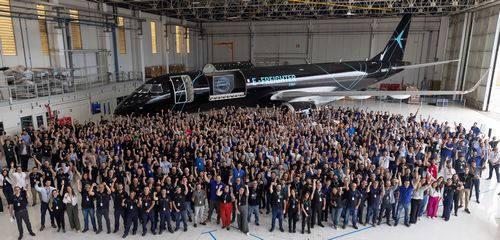
Embraer E-Freighter wins Aviation Week program excellence award.
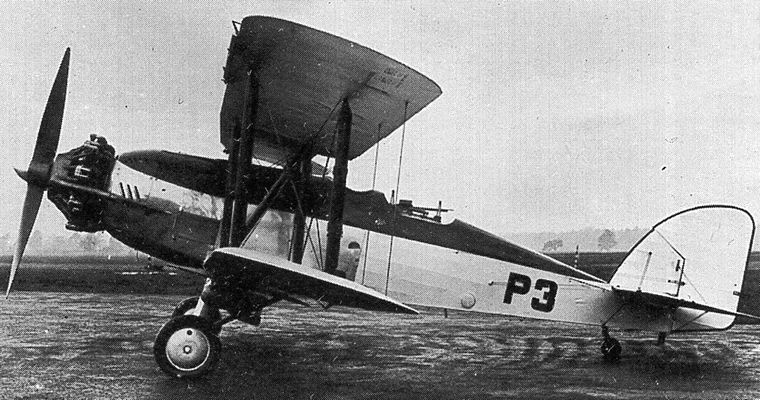
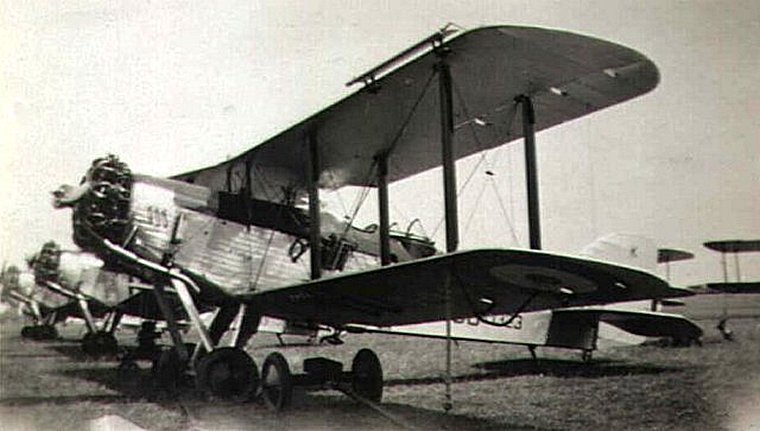
A brief history of the Westland PV-3 and PV-6.
Worldwide Incidents and Accidents
Bonus video - AFB Waterkloof Airshow 2011
Aero Club Communique # 10 of 2026
12-Year Engine Rule.
As mentioned in previous Communiques, we believe the proposed amendments to Appendix 3 of Part 43 to be acceptable and that Appendix 3 will offer relief to the pilots affected by the 12-year rule.
At this stage we wait for the CARCom meeting on the 20th of April 2026 and for the normal regulatory process to take its course.
85th Annual General Meeting of the Aero Club of South Africa NPC
It is time again for our yearly Annual General Meeting. The AGM is an important legal requirement in terms of the constitution of the Aero Club.
Here is our official Annual General Meeting Notice:
Dear Member, we are pleased to invite you to the Aero Club of South Africa NPC's Annual General Meeting (AGM), which will take place on 6th May 2026 at 18:00 for 18:30. The meeting will be held virtually on Teams and in person at the EAA Auditorium, Hurricane Road, Rand Airport, Germiston.
All members in good standing are encouraged to attend. In accordance with our constitution, we are delivering this notice of the AGM via email in this communique and publication on the Aero Club website. This notice is being sent 21 clear days in advance, as required.
Only members in good standing may attend the AGM. If you are unsure about your membership status, please reach out to us prior to the meeting.
1
Members who are unable to attend in person or virtually may appoint a proxy. Proxies must be members in good standing, and the proxy form must be completed, signed, and submitted to the Chairman at least 48 hours before the AGM. We encourage you to participate in this important event, where we will discuss key developments and plans for the future of Aero Club. Your attendance and input are highly valued.
The AGM agenda, proxy from and nomination form can be accessed on the Aero Club website at:
The 2026 Aero Club membership renewal commenced on the 1st of December.
Please visit the Aero Club website renewal portal at www.aeroclub.org.za/membership/ to renew or to register as a new member.
Have a safe week,
What MOSAIC Means for RV Owners The FAA's Modernization of Special Airworthiness Certification rule, known as MOSAIC, took effect in phases beginning October 2025. Aviation media has called it the most significant regulatory overhaul since the Sport Pilot and Light Sport Aircraft rule was introduced in 2004.
Part 2 is Still Coming, and It's a Big Deal
The second, and arguably more significant, phase of MOSAIC, covering LSA airworthiness certification for new factory-built aircraft, takes effect July 24, 2026. Expect this to be a major topic at EAA AirVenture Oshkosh this summer.
As new factory-built Light Sport Aircraft enter the market under MOSAIC's streamlined certification path, the broader aviation conversation will shift toward what's available, what it costs, and what the tradeoffs are. Understanding where your RV sits in that landscape, in terms of performance, value, and ownership experience, will matter more than ever.
MOSAIC modernizes how the FAA defines, certifies, and regulates Light Sport Aircraft. The core changes include removing the old maximum takeoff weight restriction, raising the maximum stall speed threshold to 59 knots calibrated airspeed, allowing LSA to have up to four seats, and expanding Sport Pilot privileges to cover a much broader range of aircraft, including most existing RVs.
Van's Aircraft CEO Mikael Via said the results "exceed most people's expectations," and Van's was one of the key voices shaping the rule, with company leadership participating directly in the ASTM committee process from the beginning.
For a full breakdown of what Phase 1 delivered for Sport Pilots and RV owners, read the complete overview on vansaircraft.com.
What MOSAIC Changes for RV Owners
MOSAIC delivers several meaningful improvements for the RV community.
Maintenance privileges expanded: For the first time, there is a path for non-builder owners of E-AB aircraft to complete a 16-hour Repairman (Light Sport, Inspection) course and legally perform their own annual condition inspection. Previously, this right was limited to the original builder or a licensed A&P mechanic. This change could lower costs, increases accessibility, and create new infrastructure around RV ownership.
Flight instruction simplified: MOSAIC eliminates the Letter of Deviation Authority (LODA) requirement that previously made compensated flight instruction in E-AB aircraft inconsistent and difficult to obtain. Any CFI who holds a rating in the same category and class as the aircraft can now provide compensated instruction without special FAA authorization. For most RVs, that means a CFI with an airplane single-engine land rating. No additional endorsement, designation, or LODA is required beyond that existing rating.
More RVs qualify for Sport Pilot operations: If your aircraft has a clean stall speed (VS1) at or below 59 knots, you may now be eligible to operate it under Sport Pilot privileges, including using a driver's license medical for daytime VFR flight. All existing RV models save for the RV-14 and RV-10 meet this threshold.
Night flight now permitted: Sport Pilots can now fly at night with specific training and at least a third-class medical or BasicMed qualification, expanding the utility of the RV fleet significantly.
New endorsements available: Sport Pilots can now obtain endorsements for retractable landing gear and controllable-pitch propellers, opening up more capable aircraft for the Sport Pilot certificate track.
The RV-12iS is the benchmark for factory-built RV ownership under the new rules. Van's has been producing it as a Special Light Sport Aircraft since 2013, and it remains the only complete, ready-to-fly Van's Aircraft available as of today.
Under MOSAIC, the RV-12iS becomes more relevant than ever. Its clean stall speed sits comfortably within Sport Pilot limits, making it accessible to a broader range of pilots than at any point in its history. For the pilot who wants a modern glass cockpit, exceptional handling, and the Van's quality reputation without building from a kit, the RV-12iS is the direct path to the flight line.
The MOSAIC model about to enter production includes updated creature comforts, a heated pitot tube in the wing, and will have the ability to fly in actual instrument conditions. Currently, the RV-12iS is used for IFR training, it can fly in the IFR system and file flight plans, just not fly in actual instrument conditions. Flight schools have been adopting it at an accelerating pace, which speaks to both its reliability and its long-term value as an asset.
Van's newest plane, the RV-15, was engineered from the ground up to be MOSAIC-compliant. It's Van's first high-wing design, built for backcountry and utility missions, with a clean stall speed that qualifies it for Sport Pilot operations.
The RV-15 represents what the post-MOSAIC era looks like: a high-performance, highly capable aircraft designed to take full advantage of the new regulatory landscape, without giving up any of the things that make flying an RV worth doing.
Embraer, Saab and the Brazilian Air Force unveiled the first Gripen E Fighter produced in Brazil
Embraer (NYSE: EMBJ / B3: EMBJ3), Saab and the Brazilian Air Force (FAB) officially presented the first supersonic fighter aircraft produced in Brazil, during a ceremony held at Embraer's industrial complex in Gavião Peixoto, São Paulo State.
Among the Brazilian authorities present at the event were the President of the Republic, Luiz Inácio Lula da Silva; the Ambassador of Sweden to Brazil, Karin Wallensteen; the Minister of Defense, José Múcio Monteiro Filho; the Commander of the Brazilian Air Force, Lieutenant Brigadier Marcelo Kanitz Damasceno; as well as executives from the companies involved in the program, including Francisco Gomes Neto, President and CEO of Embraer, Bosco da Costa Junior, President and CEO of Embraer Defense & Security, and Micael Johansson, President and CEO of Saab.
"We take great pride in supporting the Brazilian Air Force in this project and in developing, within Brazil, the capability to produce a high-tech supersonic fighter aircraft - fully capable of executing air superiority missions and contributing to the defense of our territorial sovereignty. The unveiling of the first Gripen produced in Brazil represents yet another significant milestone in the strategic collaboration between Brazil and Sweden. We are confident that this partnership generates value for both countries and holds great potential to open up new business opportunities," said Bosco da Costa Junior, President and CEO of Embraer Defense & Security.
"The delivery of the first Gripen produced in Brazil represents far more than the completion of an aircraft; it symbolizes the strength of a partnership built on trust, long-term vision, and true cooperation. We are extremely proud of what we have achieved side by side with our Brazilian partners. Saab remains fully committed to expanding, and deepening our presence in Brazil, strengthening the country industrially and technologically, and as an export hub to the world," said Micael Johansson, President and CEO of Saab.
Embraer's industrial site in Gavião Peixoto produces Gripen E fighter jets using a Brazilian and international supply chain, including aerostructures manufactured at Saab's facility in São Bernardo do Campo. Another 14 aircraft under the current contract with the Brazilian Air Force will follow this same production model.
Before final delivery to the customer, the aircraft will undergo functional testing and production flight tests. After this stage, the fighter will join the other ten units already delivered to the First Defense Group (1st GDA) at the Anápolis Air Force Base.
Gripen E is the world's most modern fighter aircraft, designed for multi-mission roles such as air defense, reconnaissance and strike. Gripen E integrates modern avionics, sensors, weapons and missions' systems to improve performance in complex environments. Its network-centric architecture and sensor-fusion capabilities enable information sharing across a tactical formation, supporting coordinated decision making and enhancing situational awareness and threat response.
Brazilian Gripen
The 2014 contract with the Brazilian government includes the development and production of 36 Gripen fighters - 28 single-seat Gripen E and 8 two-seat Gripen F. Deliveries began in 2020, and 10 aircraft have been handed over to date. Since February, the fighter has been operating in Quick Reaction Alert (QRA) missions from Anápolis Air Force Base, safeguarding the airspace over the federal government district.
ICAO Council's decisions reflect commitment to decreasing noise and climate impact from international aviation
New aircraft around the world, including next-generation supersonic jets, will soon be required to meet much more demanding environmental rules following the adoption of new technical standards by the International Civil Aviation Organization (ICAO) Council.
Regarding subsonic aircraft, these more stringent ICAO standards have been developed to ensure the latest technologies are used in aircraft design to reduce aviation CO2 emissions and aircraft noise globally, directly supporting international climate and sustainability goals while fostering innovation in cleaner, quieter aircraft.
The ICAO CO2 emissions standard was made 10% more stringent today and is applicable to new aircraft type designs as of 2031. In addition to this, a complex more stringent CO2 emissions standard was also adopted that will apply to new deliveries of in-production aircraft types from 2035.
The new rules further introduce more stringent noise limits for quieter aircraft, raising the bar by six decibels for large aircraft types, and two decibels for smaller ones. This new more stringent noise standard is applicable to new aircraft type designs as of 2029.
The new subsonic standards are expected to encourage further worldwide investment in fuel efficiency and noise reduction technologies across the aviation sector, generating benefits for passengers, communities, and the climate alike.
ICAO is now beginning preparations for a potential return of supersonic aircraft by addressing their noise impact first. As of 2029, these aircraft will need to comply with the noise limits that apply to today's subsonic aircraft.
The ICAO Council's actions address the complex realities of bringing new technologies to market. The newly adopted measures update the CO2 and noise standards, which are underpinned by certification procedures used to assess compliance. The new standards also ensure that procedures for measuring emissions and noise continue to be clear, consistent, and up to date with current technology and market developments.
These international standards were developed and refined through a multi-year ICAO process, involving significant technical analysis within the Committee on Aviation Environmental Protection, broad consultation with Member States and stakeholders, and review of the latest innovations in aircraft and engine technology. The collaborative approach ensures that the revised rules are both technically robust and reflective of the realities faced by regulators and manufacturers in every region.
With formal adoption of the new standards now complete, the ICAO Council has established 3 August 2026 as the effective date, and set 1 January 2027 as the point from which the new requirements will apply globally.
ICAO will accompany the transition to the new standards with detailed implementation guidance and comprehensive documentation on both the environmental benefits and regulatory impacts of the changes.
These coordinated steps are designed to ensure that the entire global aviation community is fully prepared for the shift to more stringent environmental standards, reinforcing ICAO's leadership in alignment with its vision of air transport for all by 2050, and net-zero carbon emissions.
Eve Air Mobility Flies eVTOL Prototype for Authorities, Marking Progress in Flight Test Campaign
Eve Air Mobility ("Eve") (NYSE: EVEX, EVEXW; B3: EVEB31), a leader in advanced air mobility solutions, successfully conducted a flight of its full-scale engineering prototype at Embraer's test facility in Gavião Peixoto, Brazil, for Brazilian government authorities, including Brazil's President Luiz Inácio Lula da Silva. The milestone marks further progress in Eve's flight test campaign toward the future certification pathway of its electric Vertical Take-Off and Landing (eVTOL) aircraft.
The event was also attended by the Minister of Science, Technology and Innovation, Luciana Santos; the Minister of Ports and Airports, Silvio Costa Filho; the National Civil Aviation Agency of Brazil (ANAC) President, Tiago Chagas Faierstein; Brazil's National Development Bank (BNDES) President, Aloizio Mercadante; and members of the media covering the sector.
Eve continues advancing its flight test campaign, with its engineering prototype having completed 35 flights and accumulated nearly 1.5 hours of total flight time since its first flight in December 2025. The aircraft has reached an altitude of 140 feet above ground level (AGL), equivalent to 43 meters, establishing new program milestones and demonstrating consistent flight behavior under the tested conditions, including maneuvers with simultaneous inputs across three axes.
Preliminary results indicate efficiency gains, with propulsion and battery performance above initial expectations, while noise levels remain within projections, significantly lower than those of conventional helicopters.
Flights conducted to date have focused on low-speed operations (up to 15 knots, approximately 28 km/h), enabling validation of control laws, rotor aerodynamic efficiency, thermal behavior and the propulsion model. Eve continues to advance its campaign, expanding the flight envelope and testing at higher speeds.
"We are advancing with discipline and consistency in our flight test campaign, reducing risk and building the foundation for future certification flights. The results achieved in these first months following our initial flight in December 2025 reinforce our confidence in the aircraft's architecture and our ability to deliver a safe, efficient and scalable solution for the urban air mobility market," said Johann Bordais, CEO of Eve.
In addition to flight tests, Eve has completed ground testing and related activities, including sensor calibration for measuring aerodynamic loads during flight. These efforts support the expansion of the aircraft's flight envelope, enabling flights of up to 30 knots (approximately 56 km/h) in the coming days.
"Embraer has over five decades of proven expertise in aircraft development and certification. Applying this knowledge to Eve's program reinforces our commitment to innovation and the future of sustainable aviation. We see significant potential in
the global urban air mobility market and believe Eve is well positioned to be a leader in this industry," says Francisco Gomes Neto, President and CEO of Embraer.
Certification of the aircraft remains subject to the successful completion of technical milestones and approval by the relevant regulatory authorities.
Electric Air Taxis are About to Take Flight in 26 States
The Federal Aviation Administration (FAA) approved eight pilot programs that will allow a handful of companies, including Archer Aviation, Beta Technologies, Joby Aviation, and Wisk to start widespread electric aircraft testing as early as this summer.
The three-year program, which will span 26 states, is designed to ensure U.S. companies lead the way in next-gen aircraft used for personal travel, regional transportation, cargo logistics, and emergency medicine, Department of Transportation Secretary Sean Duffy said in remarks Monday.
The pilot program, known as the Advanced Air Mobility and Electric Vertical Takeoff and Landing Integration Pilot Program, was announced last year through an executive order by President Donald Trump in an effort to speed up development of the futuristic aircraft.
Numerous electric vertical takeoff and landing (eVTOL) companies have emerged in recent years with promises of launching urban air taxis and other regional electric aircraft. However, getting those aircraft into commercial operation takes years and hundreds of millions of dollars. The FAA must certify any new aircraft, which is a multi-year process.
The pilot program will allow these companies to test their eVTOL aircraft even though they have not received full regulatory certification.
That kind of accelerated timeline could bolster the efforts, and share prices, of many eVTOL companies such as Archer, Beta, and Joby that have gone public in recent years.
Beta Technologies founder and CEO Kyle Clark said being selected for the program will allow the company to start aircraft operations one year earlier than anticipated. The company's stock price popped nearly 12% Monday. Archer and Joby, which are also publicly traded, saw stock jumps as well.
Archer compared the eVTOL program to robotaxi testing and said it will help build trust and establish a playbook for safely scaling electric air taxis. The company, which is developing a four-passenger piloted eVTOL called Midnight, said it will also help it prepare for air taxi operations in Los Angeles for the 2028 Olympic Games.
"These partnerships will help us better understand how to safely and efficiently integrate these aircraft into the National Airspace System," FAA Deputy Administrator Chris Rocheleau said in a prepared statement. "The program will provide valuable operational experience that will inform the standards needed to enable safe Advanced Air Mobility operations. We appreciate the strong interest reflected in the many proposals we received."
The FAA said it received 30 proposals.
These companies aren't going it alone, however. The pilot program requires companies to partner with state, local, tribal, or territorial governments.
The projects cover several applications of electric aircraft, including urban air taxis and regional flight. For instance, the Port Authority of New York and New Jersey have partnered with Archer, Beta, Electra, and Joby to test a dozen operational concepts, including one based out of a Manhattan heliport.
The Texas Department of Transportation will work with Archer, Beta, Joby, and Wisk to test regional flights connecting Dallas, Austin, San Antonio, and eventually Houston. That program will include building networks of air taxis that will expand from each city to extend regional reach, according to the DOT.
For instance, a project led by Utah that will test next-generation aircraft and operational concepts across the Pacific Northwest, the Rocky Mountains, and the Plains of Oklahoma will test a wide range of next-generation aircraft and operational concepts. Another project, led by the Pennsylvania Department of Transportation, will include 13 states to revitalize regional flights across the country.
Other projects are focused on cargo delivery, medical response, and automation. Beta, Elroy Air, and others will test cargo and personnel transportation flights into the Gulf of Mexico and to energy industry locations in Louisiana, Texas, and Mississippi.
The departments of transportation in Florida, Louisiana, and North Carolina also are leading projects. The city of Albuquerque is working with Reliable Robotics to test autonomous operations.
Embraer E-Freighter Wins Aviation Week Program Excellence Award
Embraer has won the 2026 Aviation Week Program Excellence Award in the OEM category. The Aviation Week Program Excellence Awards honor programs that demonstrated exceptional performance, extending their impact well beyond technical milestones. This recognition underscores the importance of innovative solutions and robust management practices.
"The E-Freighter Program represents a new frontier for Embraer and the global air cargo market. In 29 months, our teams and partners worldwide transformed the proven E-Jet platform into a highly capable, fully certified freighter designed to meet the specific demands of today's e-commerce logistics. With its exceptional payload, range, and turnaround performance, the E190F will help connect smaller cities, open new routes, and offer operators a modern, sustainable, and economically compelling solution," says Marcelo Tocci, Program Director, Commercial Aviation, Embraer.
The E190F was launched to meet the changing demands of e-commerce and modern trade, which require fast deliveries and decentralized operations, driving demand for rapid shipment distribution to secondary and tertiary markets. The jet was developed to fill a gap in the air cargo market and to replace older, less efficient models.
E-Jets converted to freighters offer over 40% more volume capacity, three times the range of large cargo turboprops, and up to 30% lower operating costs than larger narrowbodies. When combining underfloor and main-deck capacities, the maximum structural payload is 13,500 kg.
A brief history of the Westland PV-3 and PV-6.
The Westland PV-3 was a British two-seat torpedo bomber of the 1930s built by Westland Aircraft Works. The aircraft was a private venture development and based on the Westland Wapiti. It never entered production. The aircraft is best known as one of the first two to fly over Everest as part of the Houston-Mount Everest Flight Expedition.
Westland produced the PV-6, a private-venture development of its successful Wapiti. This updated aircraft embodied a number of improvements including a lengthened fuselage, brakes and wheel spats on the undercarriage and a new engine. By this time both the appearance and performance differed considerably from the standard Wapiti, so the company designated it the "PV6 Wallace." Compared with the earlier Wapiti, the Wallace was 20 inches (0.5 m) longer, incorporated an improved undercarriage and was powered by a 655 hp (488 kW) Bristol Pegasus IV engine. The first batches of MK I Wallaces were conversions of Wapitis, a total of 68 powered by 570 bhp (425 kW) Pegasus IIM3 engines.
Italy, Napoli Airport (NAP/LIRN): EasyJet flight flight U24119, an Airbus A320, stopped after lining up on runway 24 at Napoli Airport (NAP) because a car was occupying the runway; the take-off was delayed until the car had left the runway. The plane continued its flight to Malpensa safely.
Saudi Arabia, Prince Sultan Air Base: An USAF Boeing KC-135R Stratotanker was destroyed on the ground by an Iranian aerial attack on Prince Sultan Air Base, satellite images show damage on the location of the tanker, several other tanker presumed damaged as well. AT least 10 US servicemen reported wounded in the attack. Some reports state three destroyed airplanes.
Venezuela, Pedro Camejo, Apure: A Cessna T210N Turbo Centurion II, carrying false marks "YV2473" was forced to land by Venezuelan law enforcement officers and then set on fire in Pedro Camejo, Apure. It probably had been engaged in transporting drugs. The real registration mark under the applied stickers was PR-WAW (cancelled 18 February 2023 according RAB).
France, near Tarbes: Ryanair flight FR4017 from Porto to Milan, operated by a Boeing 737-800, 9H-QEP, was en route and had just passed over the Pyrenees Mountains when the aircraft encountered severe turbulence near Tarbes. During the occurrence luggage fell from the overhead bins and injured 4 passengers. Cabin fixtures were damaged during the turbulence. The crew decided to divert to Toulouse-Blagnac so that injured passengers could receive treatment. The crew changed their squawk code to 7700 and declared an emergency. The aircraft landed safely on runway 32. The 4 injured passengers were transported to hospital with injures ranging from minor cervical pain to a dislocated shoulder.