How the DC-8 became the 1st jetliner to go supersonic
Concorde wasn't the first Airliner to Break the Sound Barrier
Willie Bodenstein
07.02.2026
Google Banner Ad
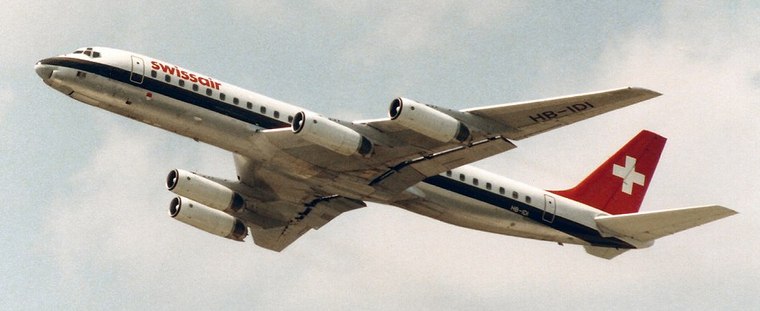
The long-range, pressurized Douglas DC-8 jetliner when launched Introduced in 1959 was as an entirely new experience in air travel. The second American jetliner to be launched into service after Boeing's 707 the DC-8 offered one of the most comfortable flying experiences then available.
On 21 August 1961 Douglas test pilot William Magruder was set to take off from Edwards Air Force Base (AFB) on a mission that was up to then never before attempted by a jetliner designed to carry passengers in comfort. His task for the day was to get out there, go faster than the speed of sound and show that the airplane can survive and not fall apart.
It did, giving Douglas bragging rights over Boeing's 707 that by then has been transporting passenger for about three years.
Off course the DC 8 wasn't designed for supersonic fight. In order to reach Mach 1, the jet had to be in a dive. This meant Magruder with flight test engineer Richard Edwards and crew had to take her up to to 52,000 feet, which incidentally was also a record for altitude, put her into a dive and hope for the best.
Edwards later told Air & Space Magazine: “We took it up to 10 miles up and put it in a half-a-G pushover. Bill maintained about 50 pounds of push. He didn't trim it for the dive so that it would want to pull out by itself. In the dive, at about 45,000 feet, it went to Mach 1.01 for maybe 16 seconds, then he recovered. But the recovery was a little scary.”
The stabilizer in fact was overloaded and the plane stalled when Magruder tried to pull it back. “What he did, because he was smart, is something that no other pilot would do,” explains Edwards. “He pushed over into the dive more, which relieved the load on the stabilizer and he was able to run the stabilizer motor and we recovered at about 35,000 feet.”
That day they set an unofficial supersonic record, payload record, and of course an altitude record for a commercial transport.
Chuck Yeager, the first person to ever go supersonic in 1947, was flying a F-104 was escorting the DC-8.
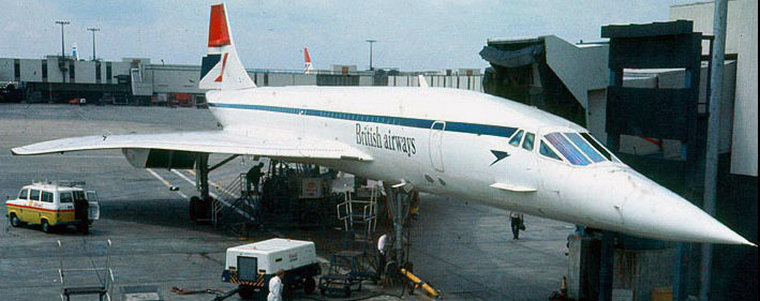
It was only during an test flight in October 1969 that the famous Anglo-French Concorde broke the sound barrier.
What made the feat even more amazing was the fact after the test, DC-8 no. N9604Z was delivered to Canadian Pacific Air Lines and was used by the carrier for almost two decades before being retired. Sadly this piece of aviation history isn't hanging in a museum somewhere: after it was put out of service in fact, Canadian Pacific sold her for scrap.
The DC-8 was produced until 1972 with 556 aircraft built.
Douglas DC3 Dakota 679
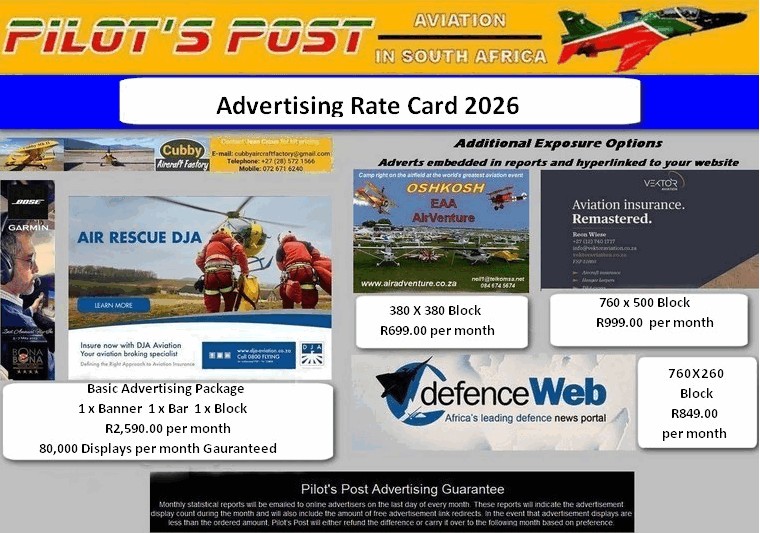
If your business wants to connect directly with the most engaged and influential audience in South African aviation, there's no better platform than Pilot's Post Online Aviation. In 2024 alone, we published 48 Midweek Updates and 192 in-depth Sunday feature reports, keeping readers informed, inspired, and invested in the latest developments across the aviation world.
We remain the only South African publication providing daily coverage from Oshkosh and most major UK airshows, giving our audience exclusive insights they can't find anywhere else.
Over the past 14 years, we've produced an unmatched 3,729 articles and reports, building a reputation for credibility, quality, and consistency that both readers and advertiser's trust. No other aviation publication in South Africa can rival our reach, depth, or engagement and none can offer better exposure at more affordable rates.
Whether you're launching a new product, promoting a service, or strengthening your brand presence, advertising with Pilot's Post ensures your message soars directly to the people who matter most in aviation.
Take your marketing to new heights-advertise with Pilot's Post and be part of South Africa's leading aviation voice.
Contact Willie on 082 442 8815 for a free no-obligation quote, and unbeatable value!