DARPA's X-76 - Combining jet speed with helicopter freedom
By Willie Bodenstein
22.11.2026
Google Banner Ad
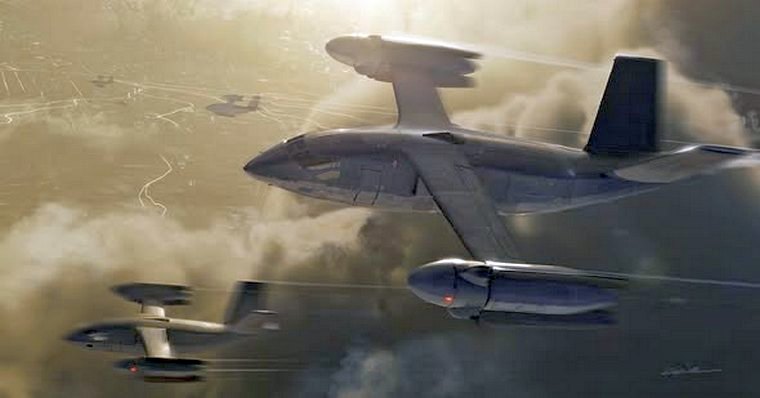
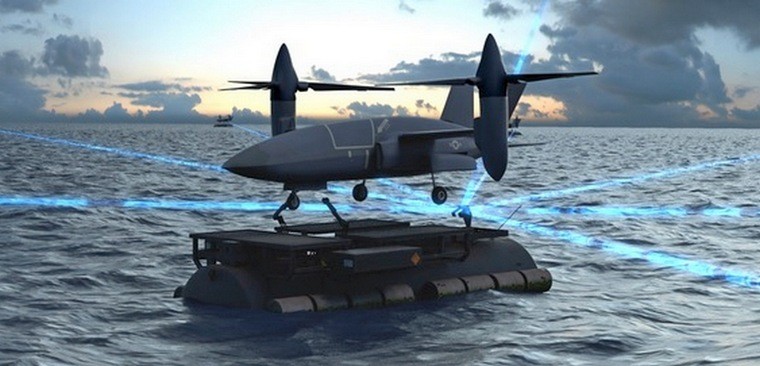
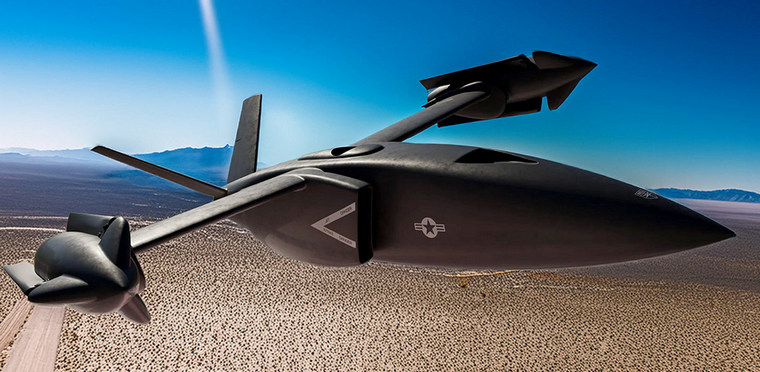
A new experimental aircraft being developed by Bell Textron could change the way military aircraft operate, combining high-speed cruise performance with the ability to take off and land vertically without a conventional runway.
Military aviation has long faced a difficult compromise. Fixed-wing aircraft offer speed and range but depend on runways, while helicopters can operate from confined and unprepared locations but are considerably slower.
The US Defense Advanced Research Projects Agency (DARPA) hopes to overcome this limitation with its Speed and Runway INdependent Technologies (SPRINT) programme. Its experimental aircraft, officially designated the X-76, is intended to demonstrate that an aircraft can combine the advantages of both.
Bell Textron has been selected to design and build the demonstrator, following the successful completion of its Critical Design Review (CDR). This important milestone means that the programme can now move into the manufacturing, integration and assembly stages, followed by ground testing.
The X-76 joins the distinguished family of experimental X-planes developed to explore new aviation technologies and challenge conventional aircraft design. Its designation also has historical significance, marking the 250th anniversary of American independence in 1776.
The SPRINT programme is a joint initiative between DARPA and US Special Operations Command (SOCOM). Its objective is to develop technologies that could give military forces the ability to deploy rapidly without relying on conventional airfields.
The planned X-76 demonstrator will explore a combination of capabilities that would be particularly valuable in remote or hostile operating environments.
These include cruising at speeds exceeding 400 knots (approximately 740 km/h), hovering when required, and operating from unprepared surfaces where conventional aircraft would be unable to land.
In practical terms, the concept is to combine the speed normally associated with a fixed-wing aircraft with the vertical take-off and landing capability of a helicopter. Such an aircraft could potentially transport personnel and equipment over long distances before landing in areas where no runway is available.
For special operations forces, this could offer considerable advantages, particularly when access to established airfields is limited or when speed and flexibility are essential.
Cmdr. Ian Higgins of the US Navy, DARPA's SPRINT programme manager, described the runway as both an advantage and a limitation. While it allows aircraft to achieve high speeds, dependence on runways also creates vulnerability.
He explained that SPRINT is intended to provide military planners with more operational options, including the ability to deliver rapid reinforcement and potentially life-saving assistance without requiring access to a conventional runway.
SPRINT entered its second development phase in May 2025, following Bell Textron's selection to proceed with the programme.
With the Critical Design Review successfully completed, work will now concentrate on building the X-76 demonstrator, integrating its systems and conducting ground tests before it takes to the air.
The programme's third phase, which will involve flight testing, is planned to begin in early 2028.
Although the X-76 is an experimental aircraft rather than an operational military platform, the technologies demonstrated could help shape the next generation of military vertical-lift aircraft.
If successful, SPRINT could open the door to a new category of aircraft offering something military aviation has long sought: the speed of a fixed-wing aircraft without the restriction of needing a runway.